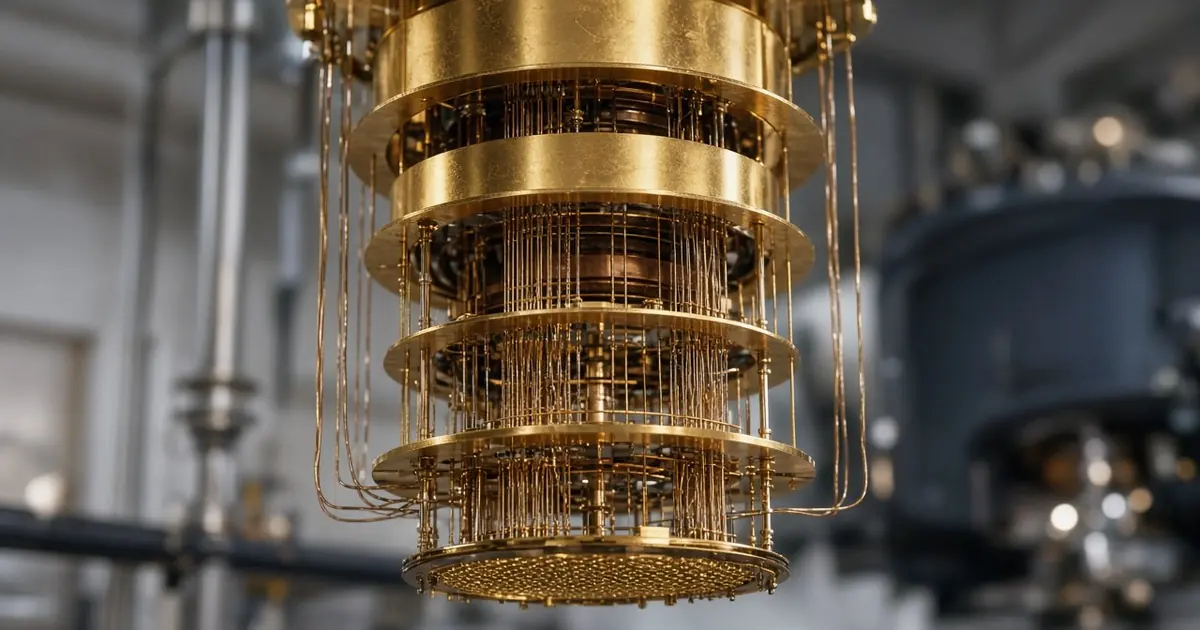
IQM offers Halocene buyers an upgrade path from 150 to more than 1,000 qubits, without downtime
Short answer: IQM Quantum Computers has launched an upgrade programme for Halocene, its error-correction product line, that gives customers a route from today's 150-qubit system to a future system with more than 1,000 qubits. The company announced it on 17 November at the SC26 supercomputing conference in Chicago.
According to IQM, when a customer upgrades it installs the new Halocene machine while the current one keeps running, then removes the old system once the new one is in service. Its HPC integration service, included with every upgrade, connects each new system to the centre's existing infrastructure, job schedulers and GPU platforms. IQM says Halocene generations share infrastructure, error-correction methods and software, so the work done on one system carries over to the next.
IQM introduced Halocene in November 2025 with a 150-qubit system. The LUMI AI Factory, coordinated by Finland's CSC, has since chosen it for LUMI-IQ, which will be connected to the upcoming LUMI-AI supercomputer. The company points to its record with existing customers: VTT has moved through IQM systems since 2021, from 5 qubits to a 53-qubit machine coupled with LUMI, and the Leibniz Supercomputing Centre has integrated four IQM systems.
"With Halocene now upgradable to over 1,000 qubits, our customers can start today, run hybrid workloads alongside their AI and HPC systems, and move to each new system without downtime," said Jan Goetz, IQM's co-founder and chief executive. Quantum Computing Report describes the plan as a zero-downtime upgrade programme for the product line.
The release does not say when the 1,000-qubit system will be ready, what an upgrade costs, or what logical-qubit performance customers should expect. The pitch is really about procurement: a centre buying a quantum computer now wants to know it will not be stranded in a few years, and IQM is promising continuity rather than a specific technical milestone.