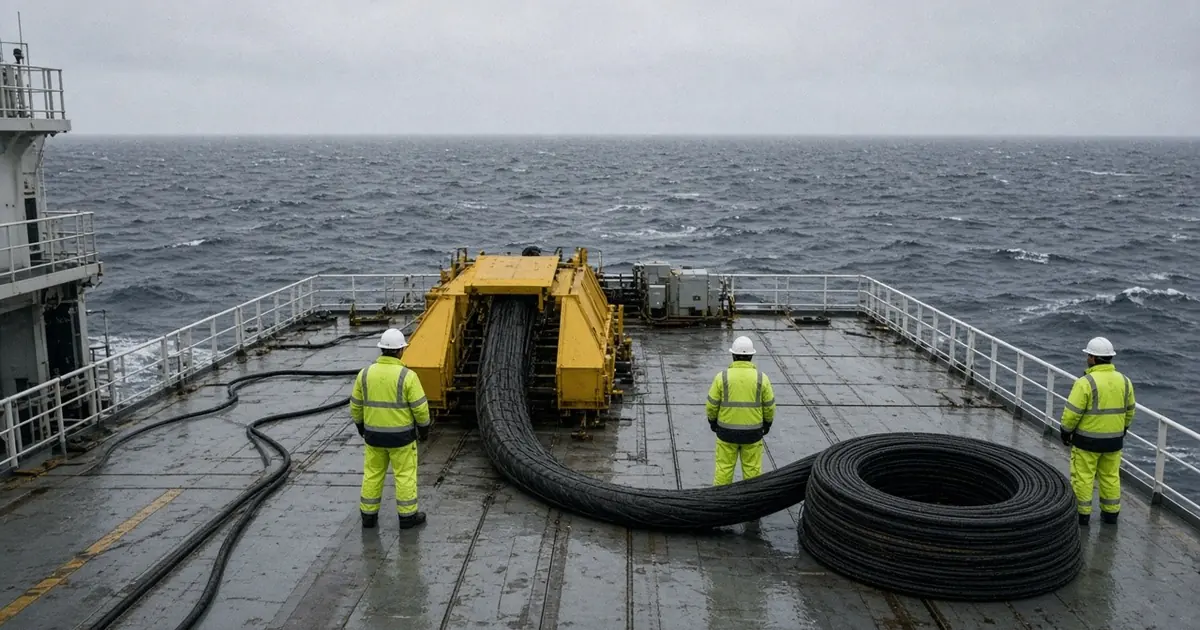
GPS can be jammed in minutes, so IonQ wants ships and planes to navigate with atomic clocks and gravity instead
Ships and planes lean on satellite navigation more than most people realise, and IonQ thinks quantum physics can be the backup. "When GPS signals drop in contested airspace or sea lanes, conventional inertial navigation drifts hundreds of meters within minutes," IonQ posted on X on Friday. "That vulnerability is no longer theoretical."
## The problem, in IonQ's numbers
IonQ says that "in 2025 alone, over 10,000 maritime vessels faced GNSS disruptions," and that "commercial airliners are routinely fed spoofed coordinates across European flight corridors." Those figures are IonQ's, and the post does not give a source for the vessel count. GNSS is the umbrella term for satellite navigation systems such as GPS.
## What IonQ is selling
The company's Sensing division pitches three pieces, according to the post. First, "tactical optical clocks" that it says "maintain GPS-level timing (10 nanoseconds) for 30 continuous days without external sync". Second, "passive geophysical navigation" using atomic gravimeters and magnetometers that measure the Earth's gravitational and magnetic fields, which IonQ calls "completely passive, RF-silent, and spoof-proof". Third, hardware that shares engineering with its trapped-ion computers and quantum networking.
The idea behind the second piece is simple. Gravity and magnetism vary slightly from place to place, so a sensitive enough instrument can match readings to a map without sending or receiving any radio signal, and there is nothing for an enemy to jam.
## Field tests it points to
IonQ cites two trials. In 2022, at the RIMPAC naval exercise, it says three autonomous optical clocks spent 21 days at sea and "accrued < 300 picoseconds of drift per day", which it calls the best at-sea clock demonstration to date, published in Nature. In 2026, it says a 51-day Navy-sponsored trial put its commercial Evergreen-30 optical clock aboard the training ship TS Patriot State.
## Read it as a pitch
The post is marketing, and it ends with a question to potential customers. IonQ did not announce a new contract or price. Quantum navigation is a crowded field: Infleqtion recently showed a cold-atom system too, as we reported in our Infleqtion story. The thing to watch is whether these sensors win defence orders, not just trials.